Discover
Find people who have chosen to be discoverable at the same meeting location.
A location-aware relationship research application shaped by a simple insight: where people meet can be as important as whom they meet.
Developed · Not yet publishedDating Research grew from the development of the Access Report application. Its founder recognized that a first date must take place somewhere both people can comfortably access. A wheelchair user may need step-free access, an accessible restroom, and seating; another person may prefer a quiet venue, low stimulation, or a familiar place.
The application brings meeting preferences and geographic proximity into the discovery process. Its concept recalls the everyday possibility of meeting someone at a place one regularly visits, rather than relying only on distant online profiles.
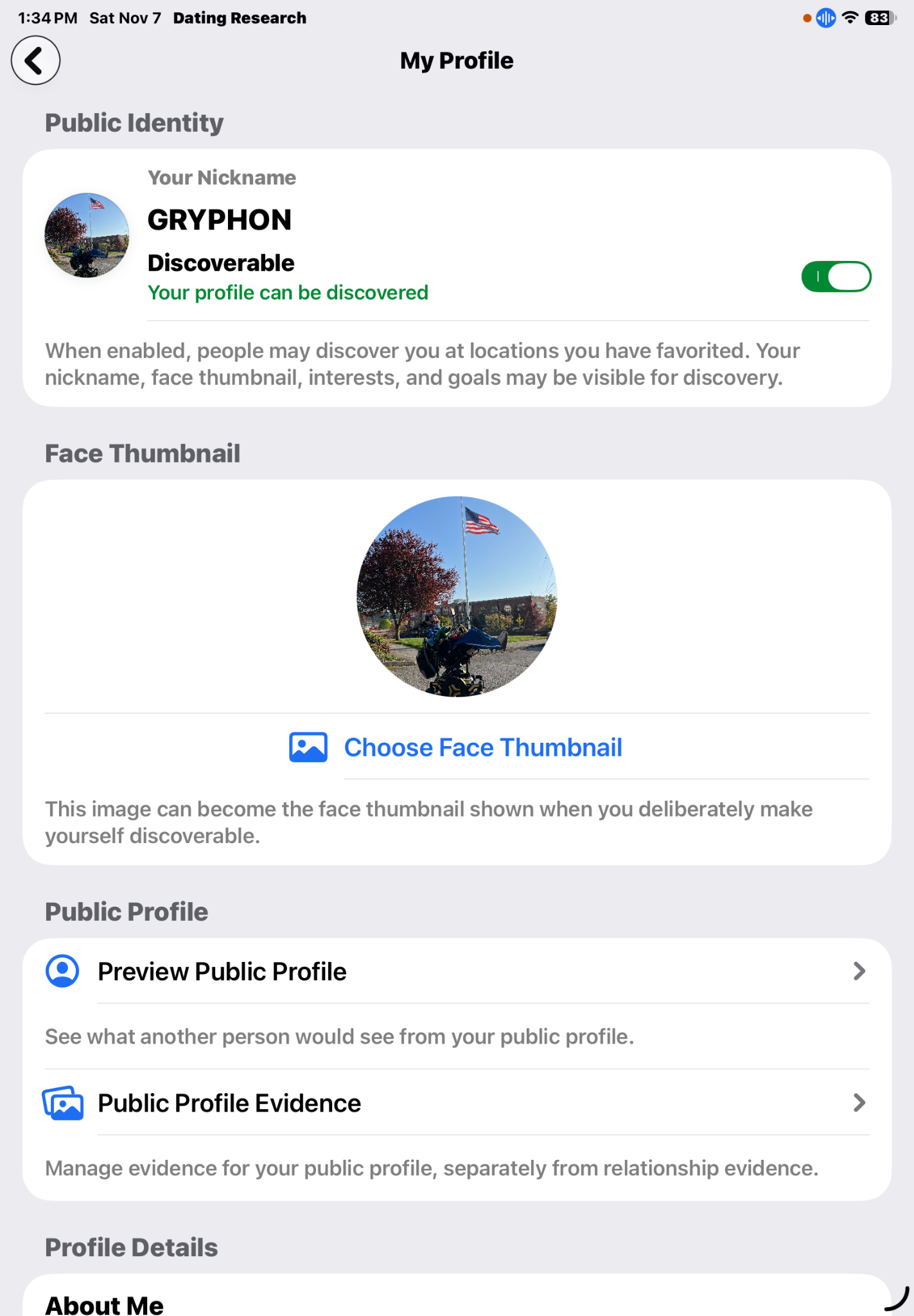
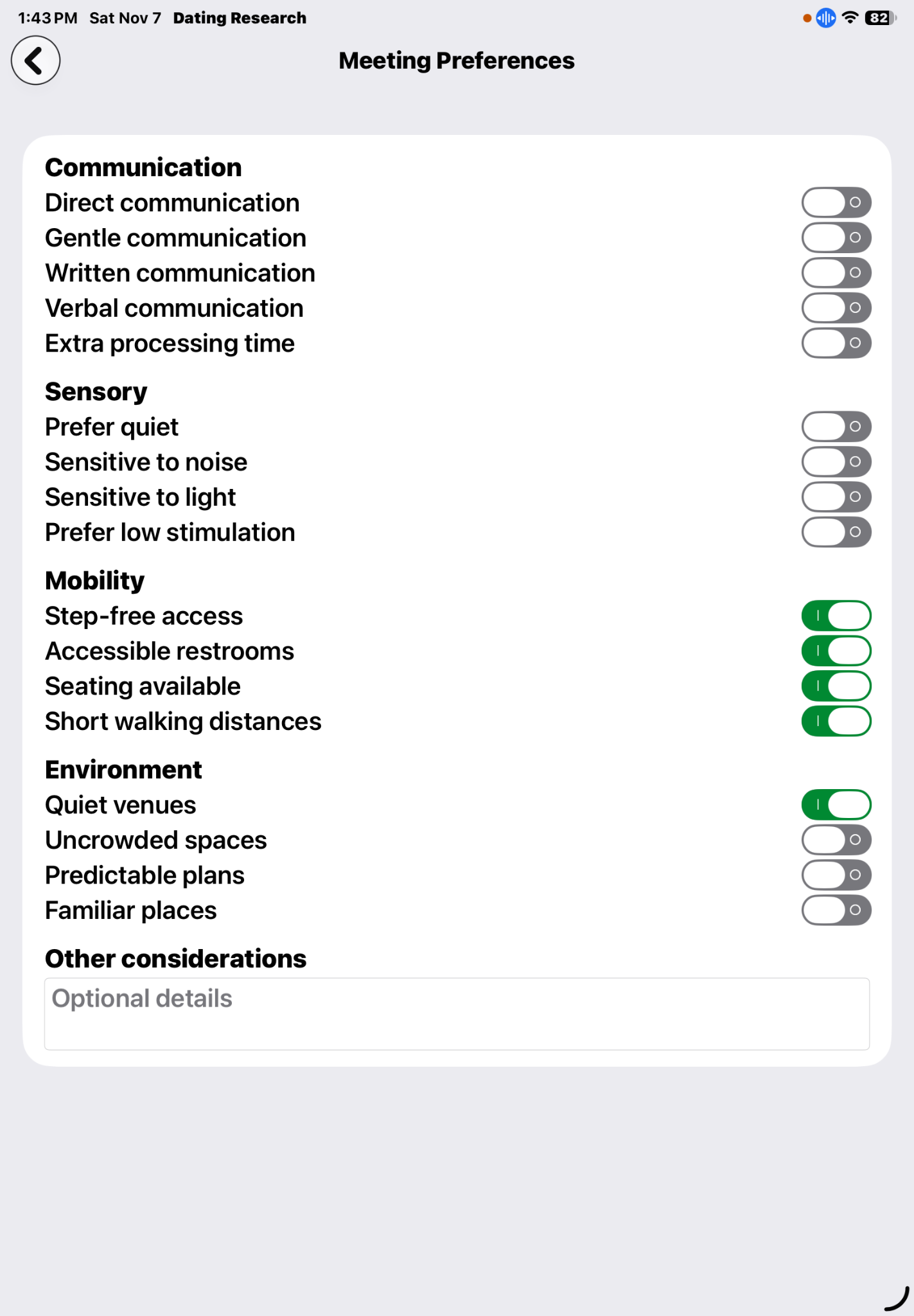
Users can manage a public discovery profile separately from private relationship research. Profile controls include discoverability, nickname, profile image, interests, relationship goals, and social information. Meeting preferences include communication, sensory, mobility, environment, and other considerations.
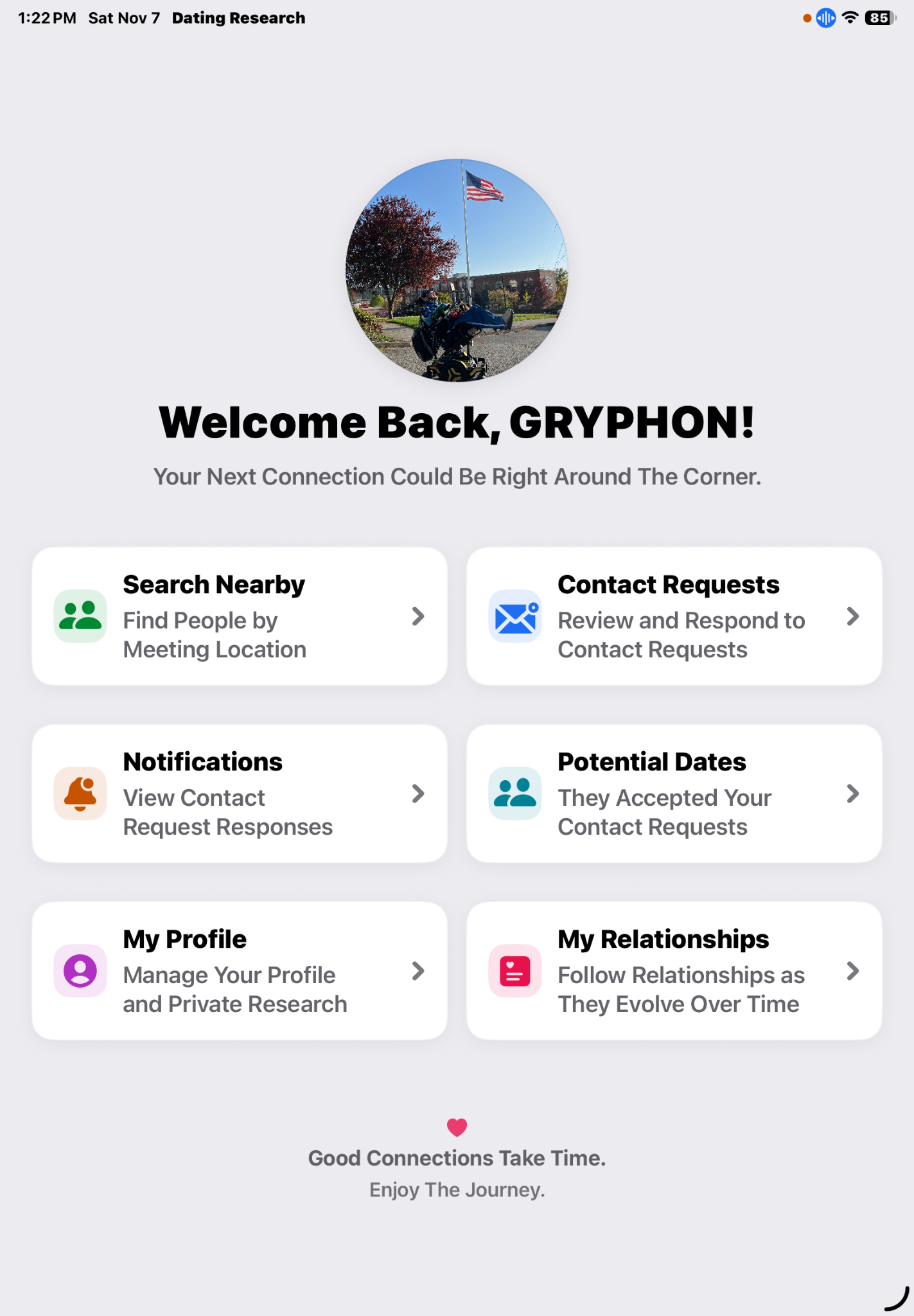
Users set a search area and can explore nearby meeting venues. The demonstrated design uses a maximum search radius of one mile for the free version and up to five miles for premium. Users can favorite locations and separately choose to check in at a location. Being discoverable in a profile does not by itself check the user in; check-in is an intentional action from the map.
People checked in at the same location can use “See People Here” to discover one another. The application displays only information the other person has deliberately made available for discovery. Location-based discovery does not itself verify identity or guarantee safety.
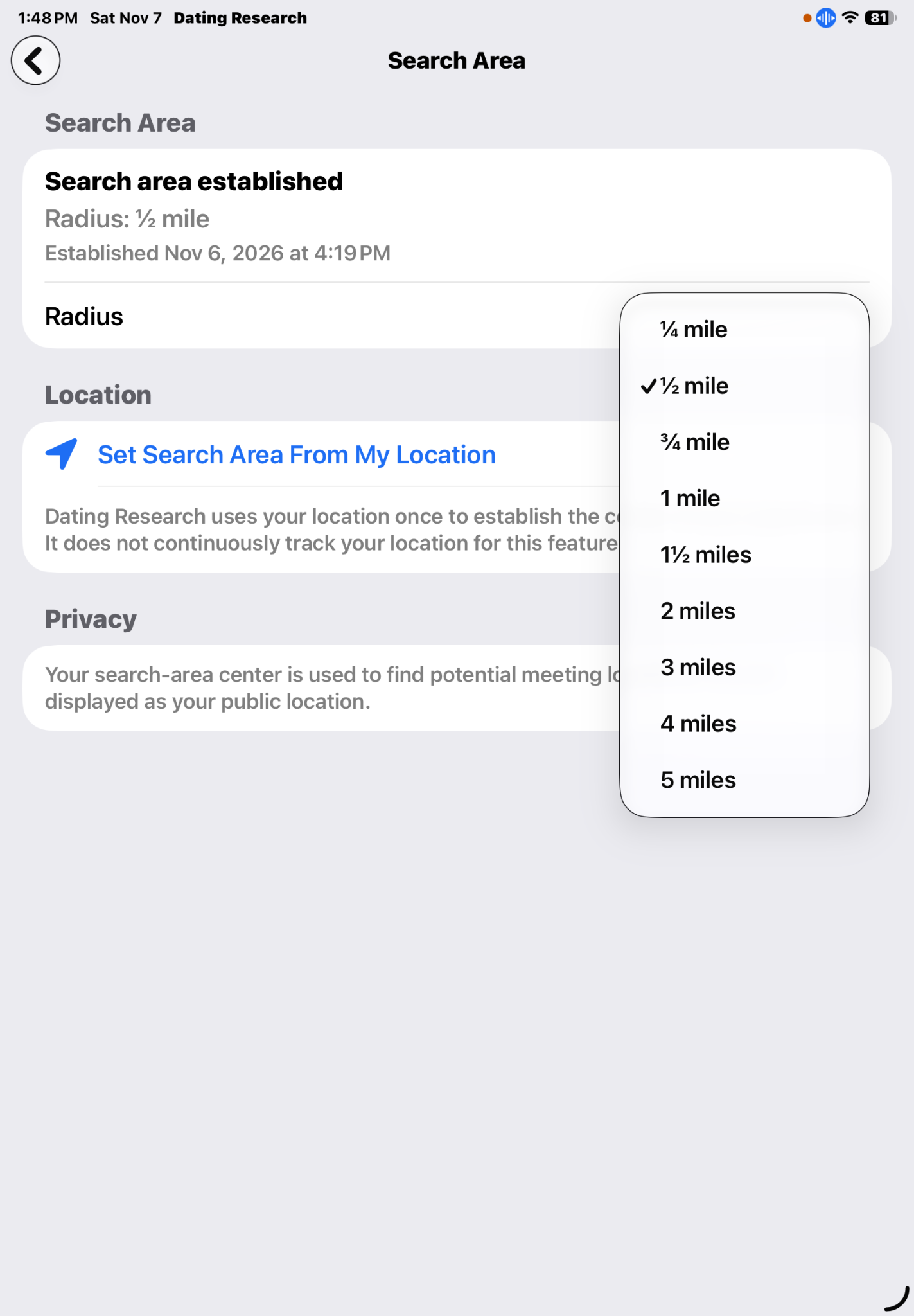
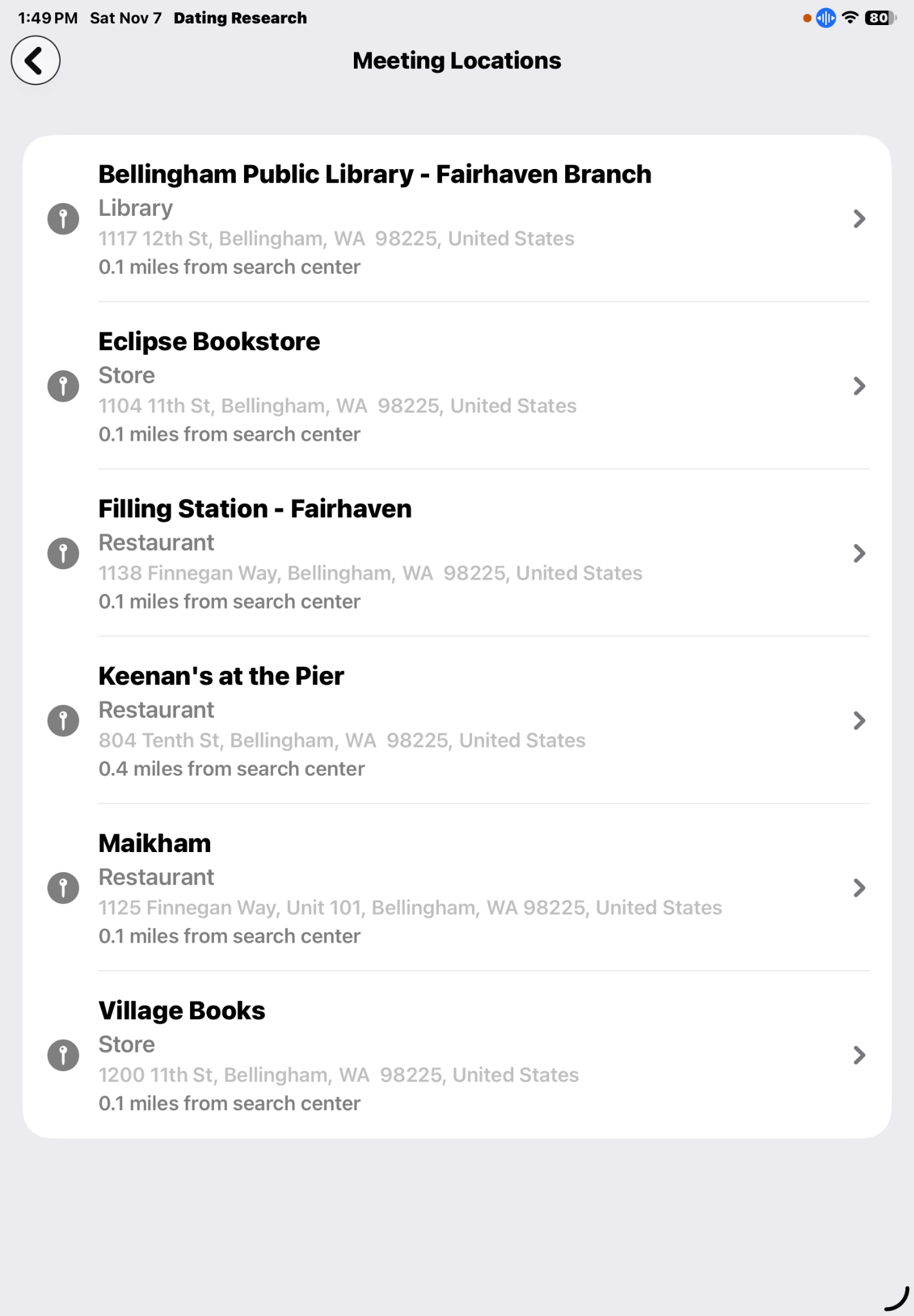
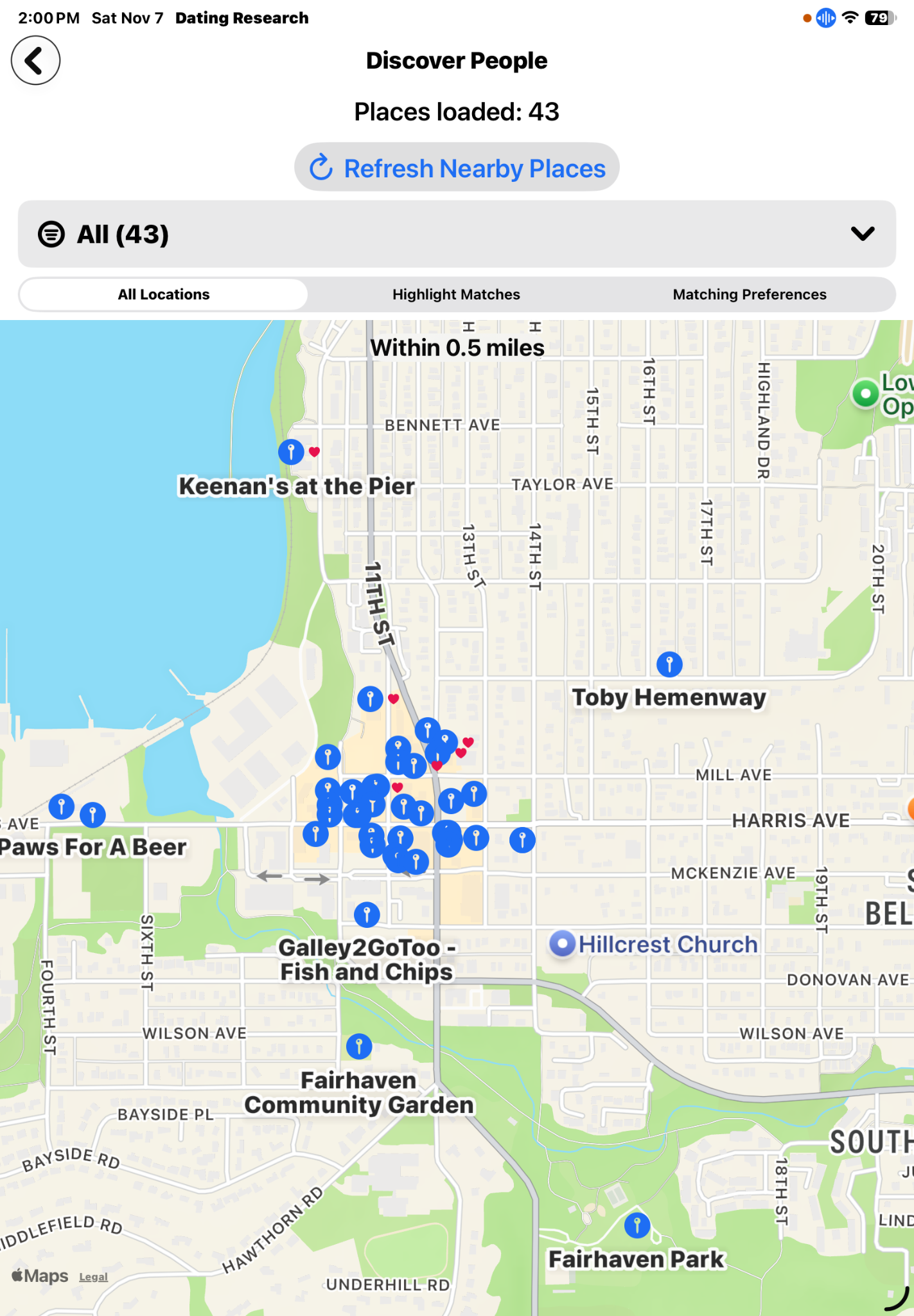
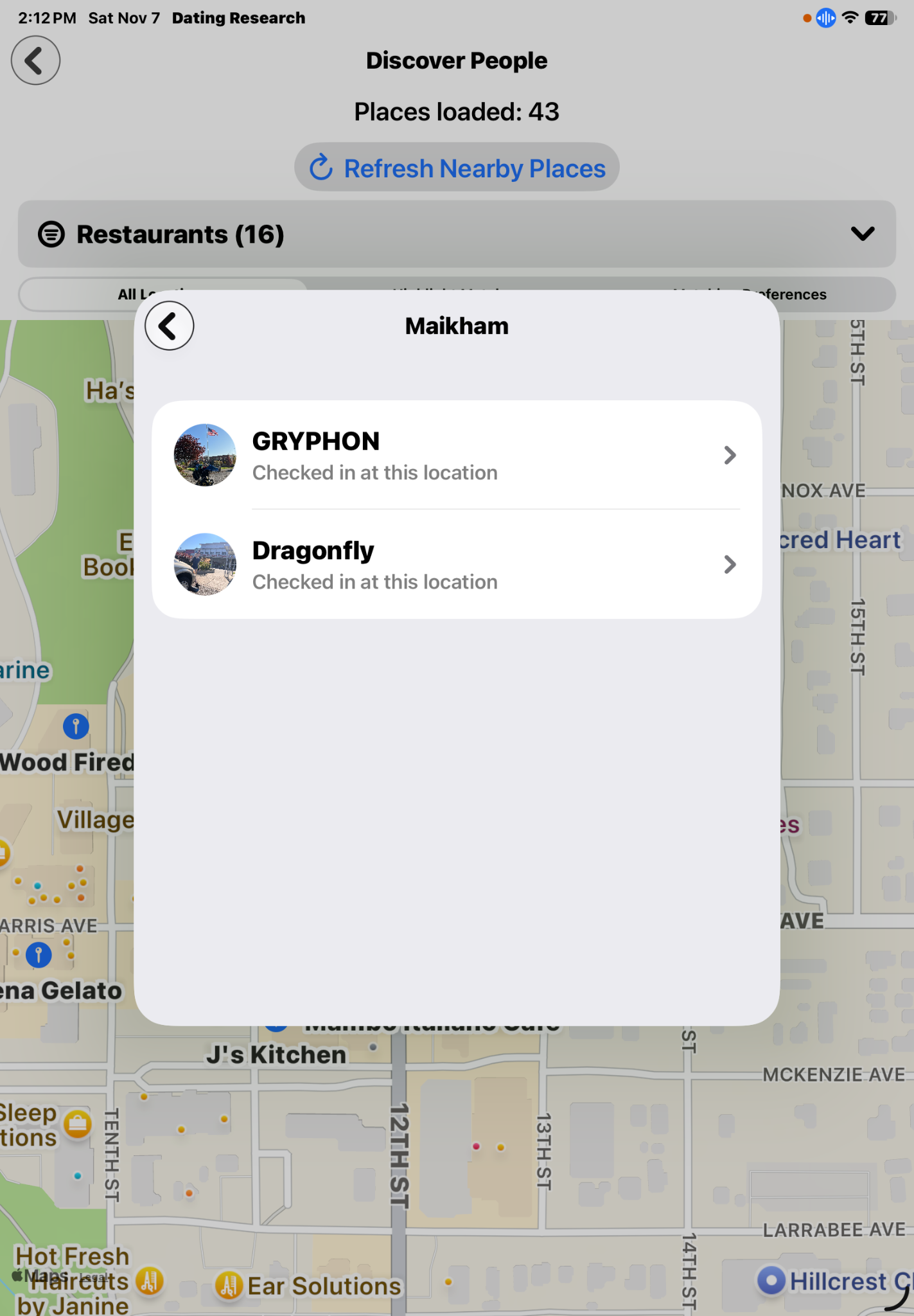
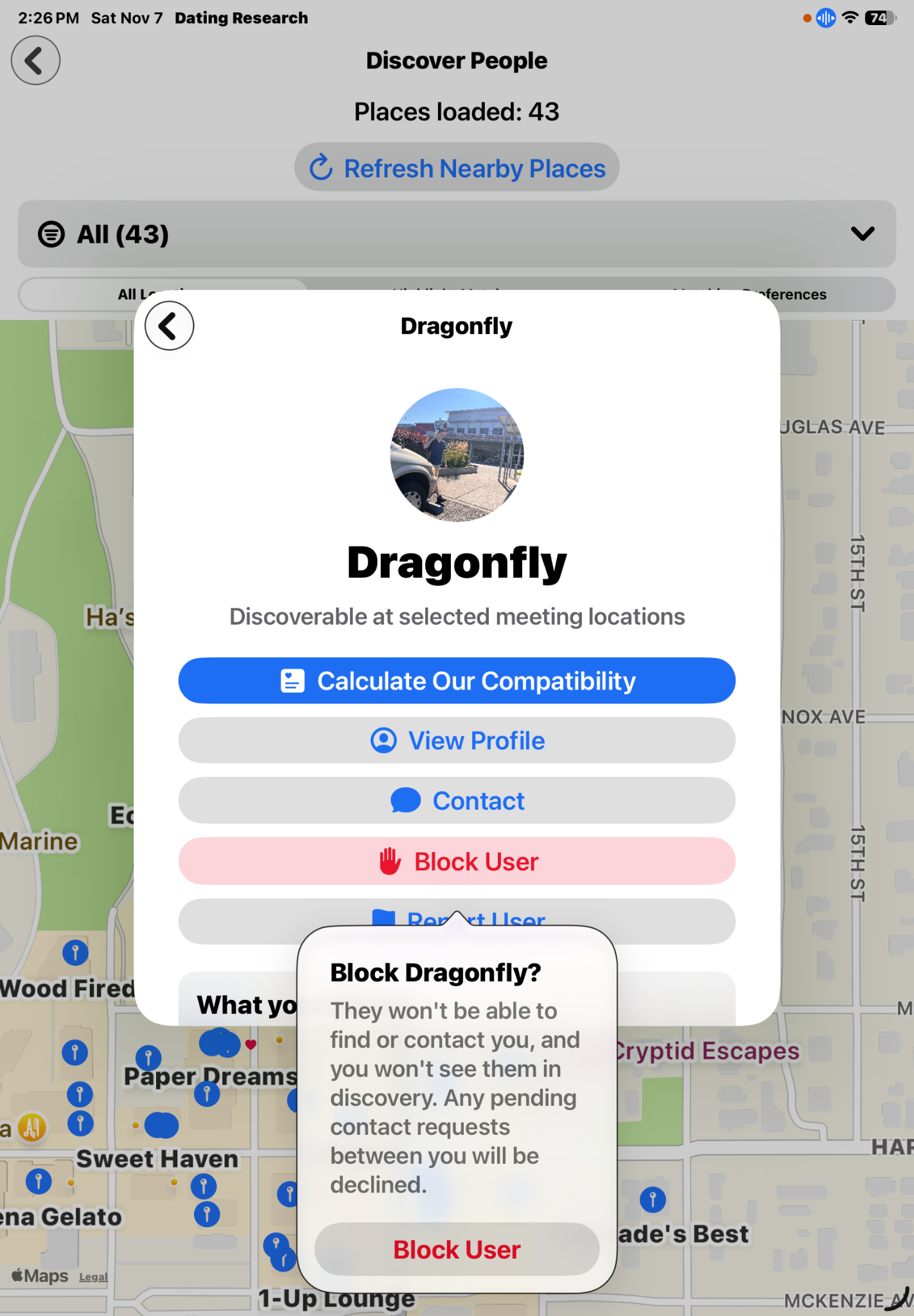
Find people who have chosen to be discoverable at the same meeting location.
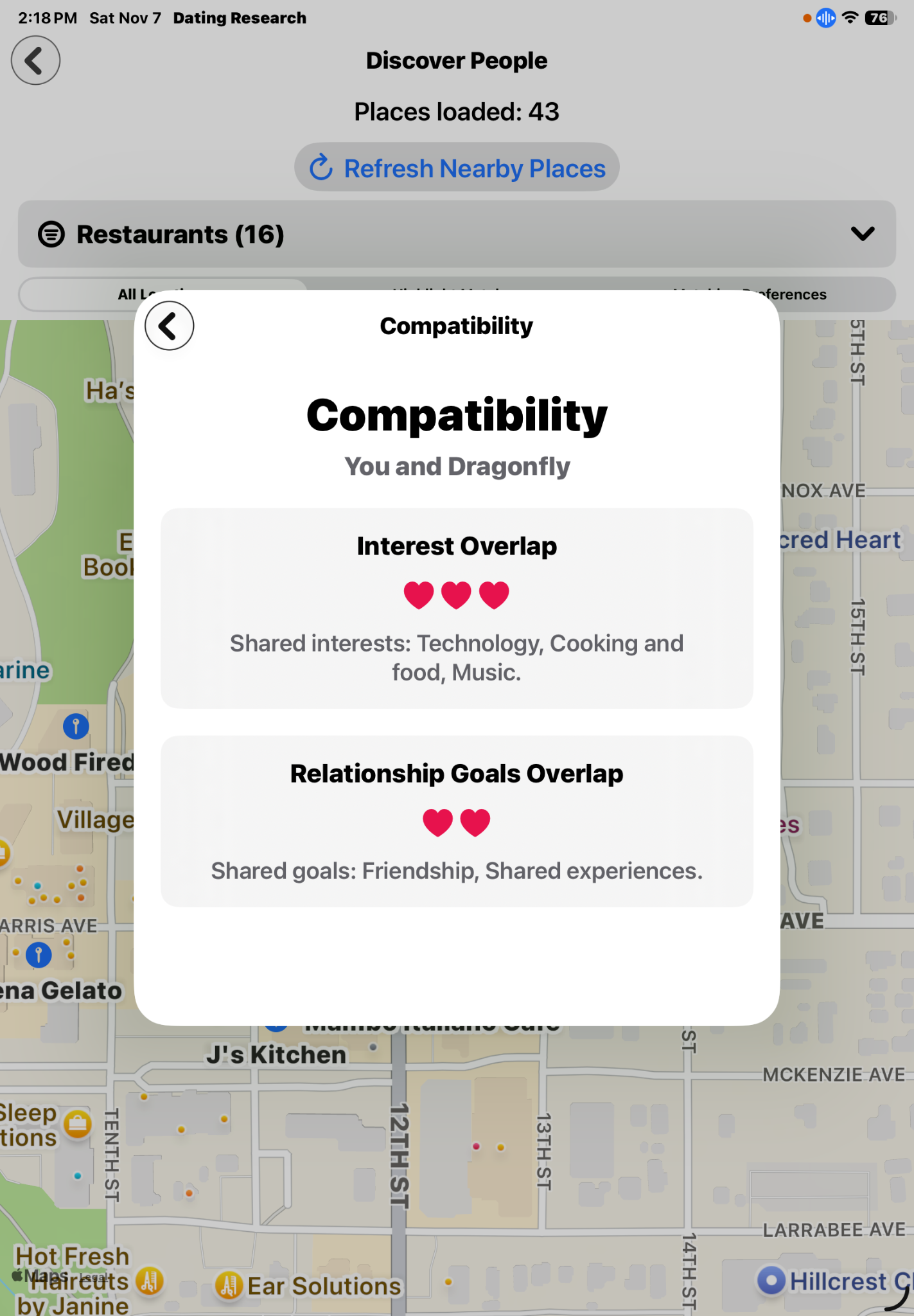
Compatibility displays overlap in interests and relationship goals. It is not a prediction of relationship success.
Send a contact request; the recipient chooses whether to accept or decline.
After a contact request is accepted, propose a date, time, and location. The other person can respond to the proposal.
The My Relationships area provides a private record organized into six sections. These records are distinct from the public discovery profile and are not automatically shared with other users.
Record meetings, duration, meeting type, setting, noise and privacy levels, ratings, and reflections.
Record decisions, contact methods, reasons for contact, responses, and optional dates.
Write dated personal observations.
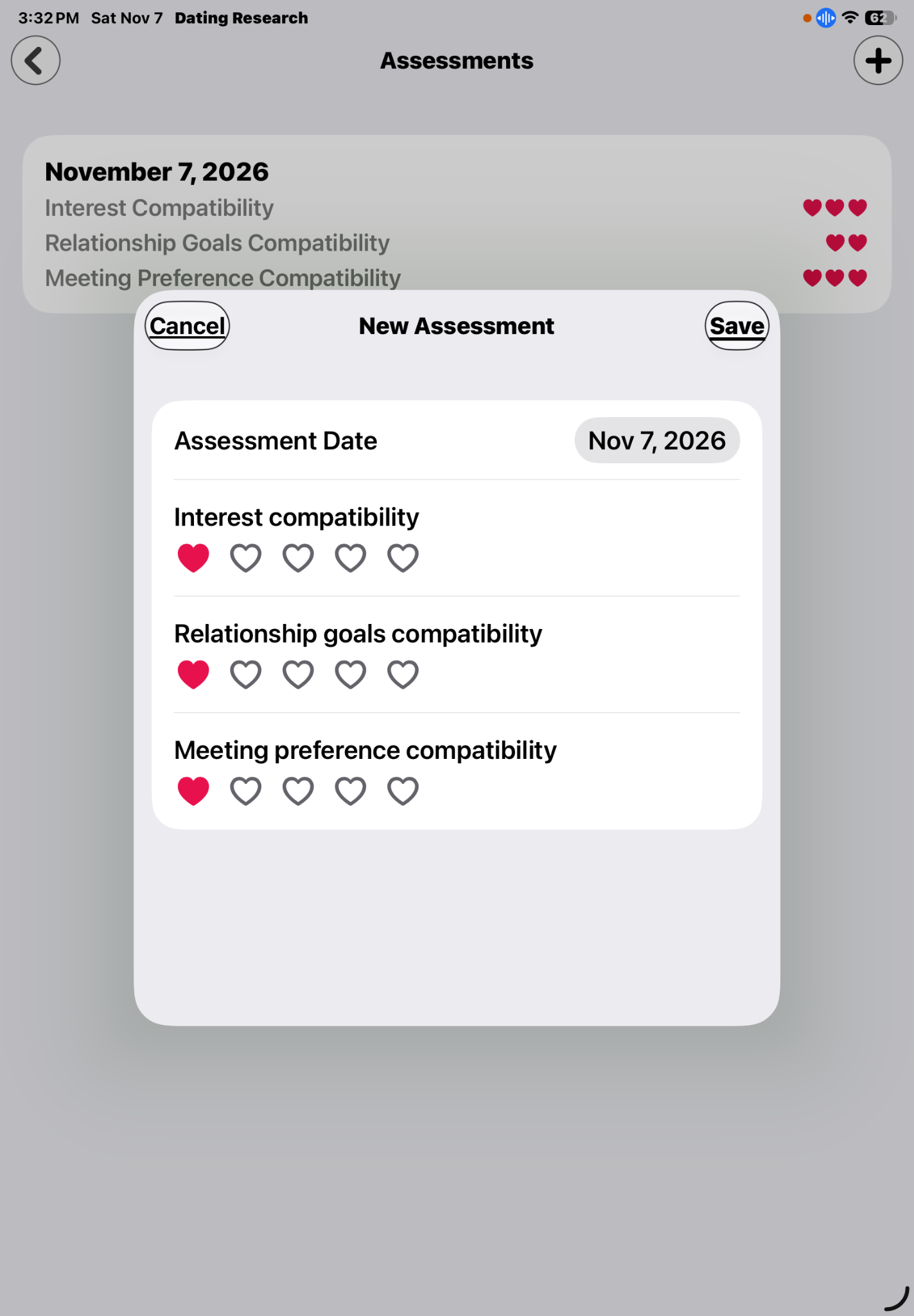
Record ratings for interest compatibility, relationship-goal compatibility, and meeting-preference compatibility.
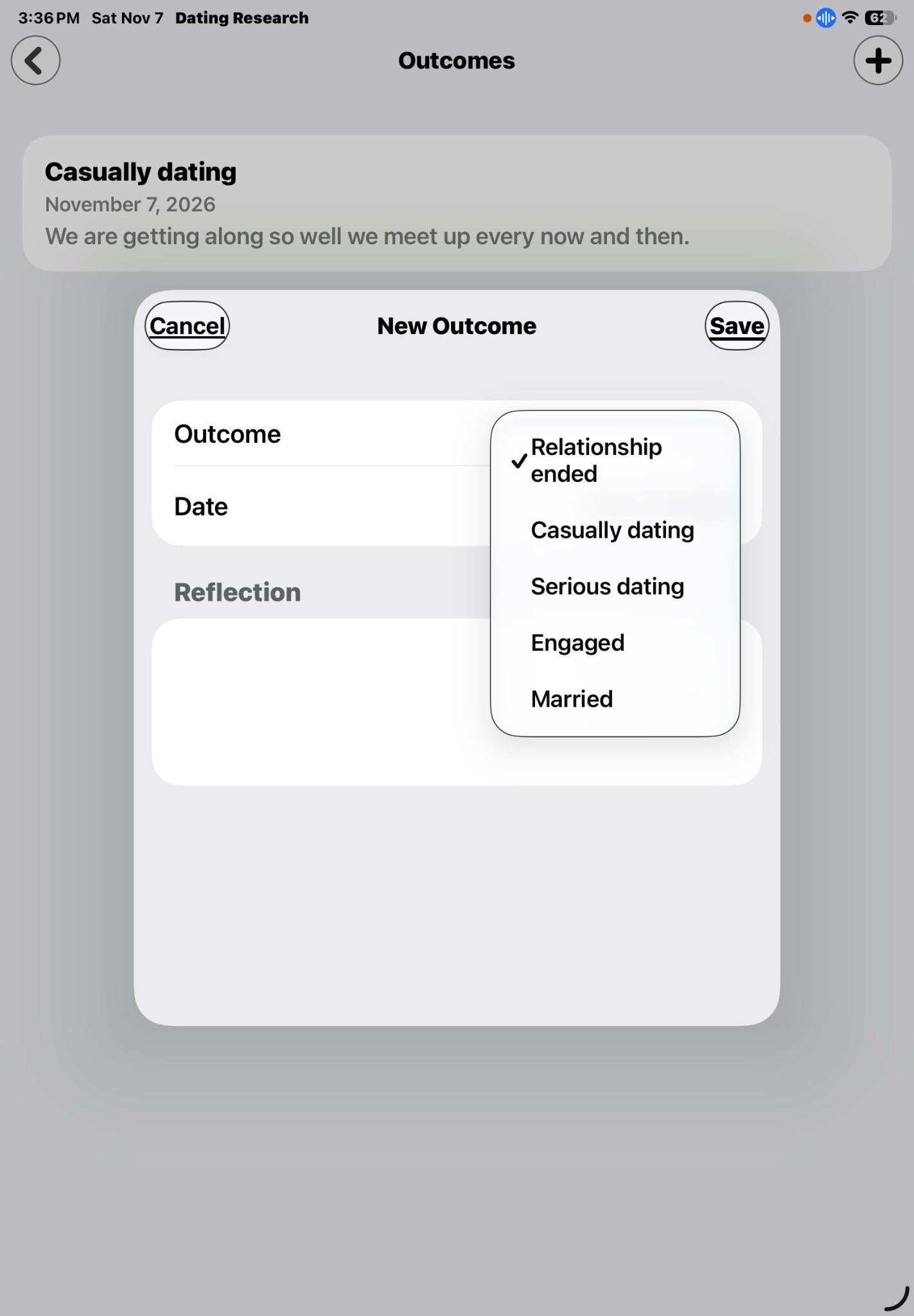
Record relationship outcomes such as casually dating, serious dating, engaged, married, or relationship ended, with a date and reflection.
Keep private photos with captions and dates.
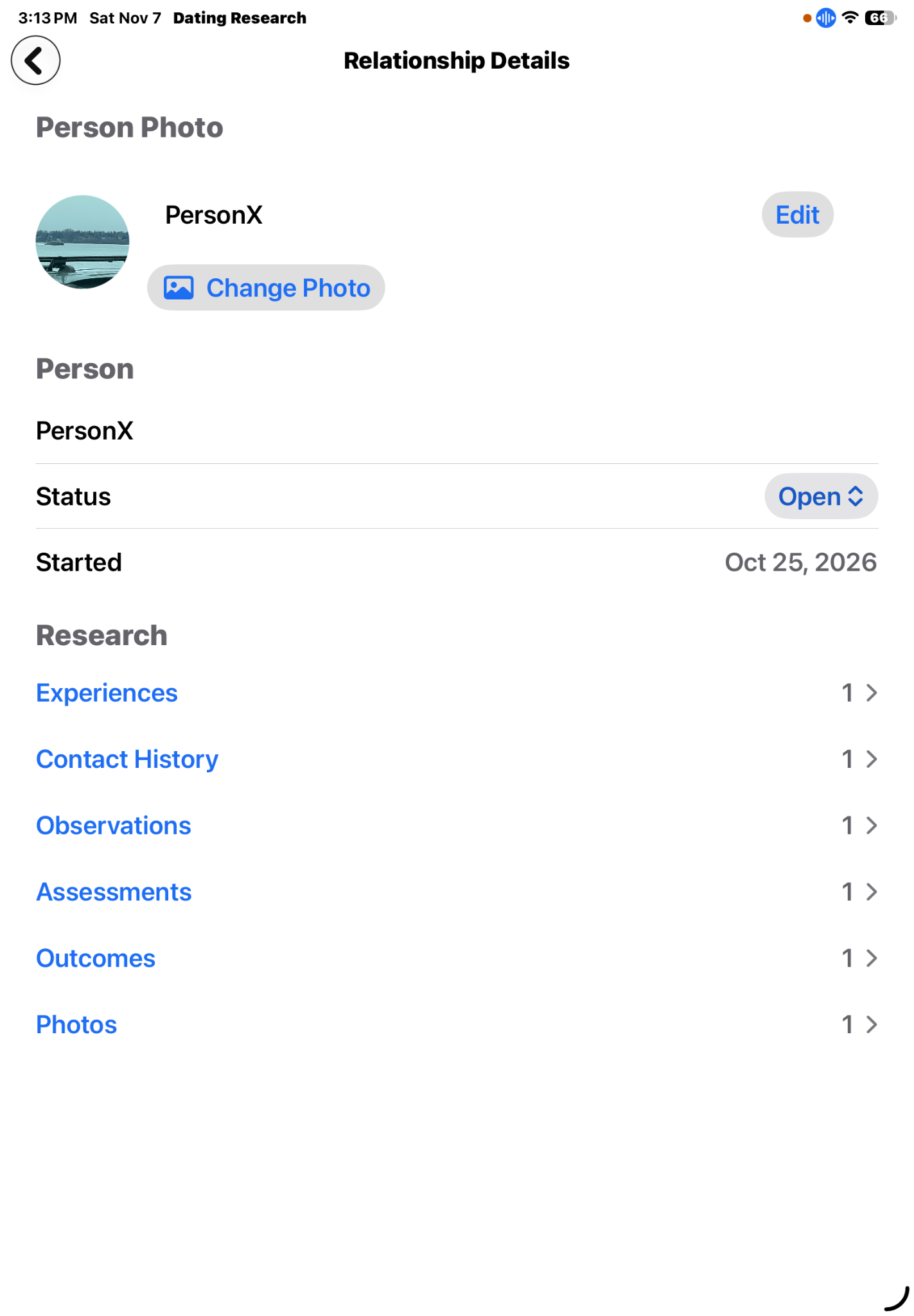
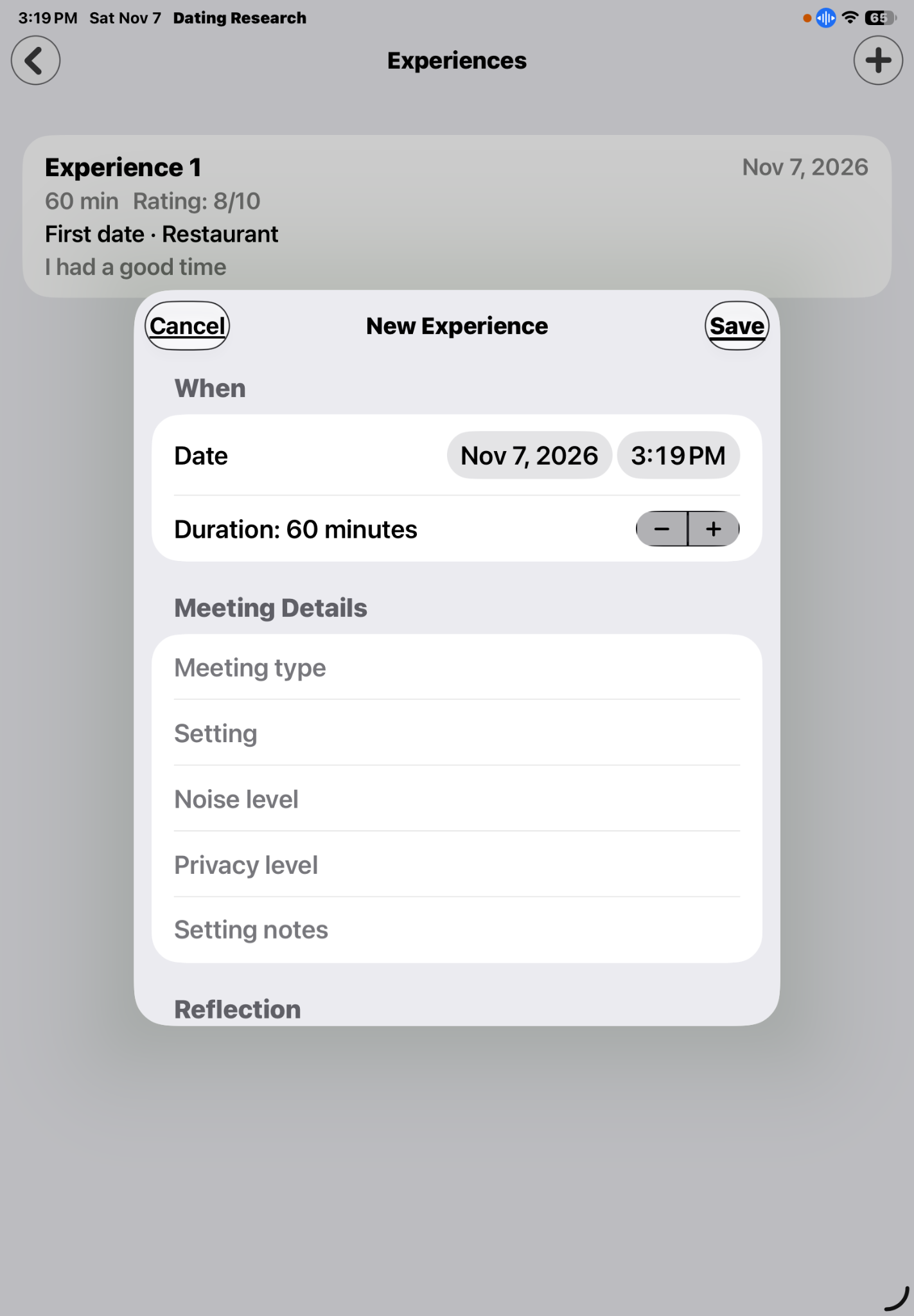
Dating Research has been developed as an iPad application and demonstrated in a cross-device workflow using an iPad and an iPhone. It is not yet published.
Access Report focuses on understanding accessibility at physical locations. Dating Research explores how location, individual preferences, and intentional discovery may support social participation and relationships. Together, the applications reflect Gryphon Foundation's interest in reducing barriers to participation in everyday community life.